






What is Engineering Mechanics? – Introduction 101


What is Engineering Mechanics? – Introduction 101
I still remember the first time I analyzed the structural integrity of a vehicle component at one of the world’s leading OEMs. Every force, load, and motion had to be meticulously calculated to ensure safety and efficiency. That’s when I truly understood what is engineering mechanics? —it’s the fundamental science that explains how forces interact with physical structures, whether it’s a car, a bridge, or a spacecraft. In this article, we’ll explore the core principles of engineering mechanics and how they impact the designs we rely on every day
Table of Contents
What is Engineering Mechanics?
Engineering mechanics is a core discipline within engineering that examines the behaviour of physical bodies under the influence of forces and displacements. It serves as the foundation for various engineering fields, such as civil, mechanical, aerospace, and materials engineering. By applying the principles of mechanics, engineers can predict how structures, machines, and materials will respond under different conditions, ensuring their safe and efficient operation.

Engineering Mechanics: The Three Core Branches
Engineering mechanics is a fundamental field that underpins many engineering disciplines. It is generally divided into three main branches, each focusing on different aspects of how forces affect objects and materials. The three core branches of engineering mechanics are:
- Statics
- Dynamics
- Strength of materials
These are key to understanding and addressing real-world engineering challenges. Let’s take a closer look at each one.
Statics: Understanding Forces and Their Effects on Objects at Rest
Statics focuses on the study of forces acting on bodies that are in equilibrium—either at rest or moving at a constant velocity. In statics, the total of all forces and moments (torques) must be zero, ensuring that the system is balanced. This branch is essential for analysing how structures such as bridges, buildings, and dams maintain stability under various loads, including gravity, wind, and applied forces.
Key applications of statics include:
– Designing buildings that can safely support weight and resist environmental forces without collapsing.
– Ensuring bridges can handle heavy traffic loads while maintaining structural integrity.
– Analysing trusses, beams, and supports to confirm they can bear expected loads securely.
A solid grasp of statics allows engineers to design structures that remain safe and stable under all anticipated loading conditions.

Dynamics: Exploring How Forces Influence Objects in Motion
Dynamics focuses on objects in motion and the forces that cause or result from this movement. It is divided into two key areas:
– Kinematics: This deals with describing motion—covering displacement, velocity, and acceleration—without considering the forces responsible for the movement.
– Kinetics: This examines the forces that cause motion and their relationship to an object’s mass and acceleration.
Dynamics is crucial for analysing systems where motion is a critical factor, including:
– Designing vehicles, from cars to aircraft, to understand their behaviour under forces like acceleration, braking, and turning.
– Analysing machinery with moving parts to predict how forces will affect performance, efficiency, and durability.
– Evaluating how dynamic forces like wind or seismic activity impact buildings and bridges.
By applying the principles of dynamics, engineers can predict how objects will move and ensure that systems operate safely and efficiently under various dynamic conditions.
Strength of Materials (SOM): Understanding How Materials React to Applied Forces
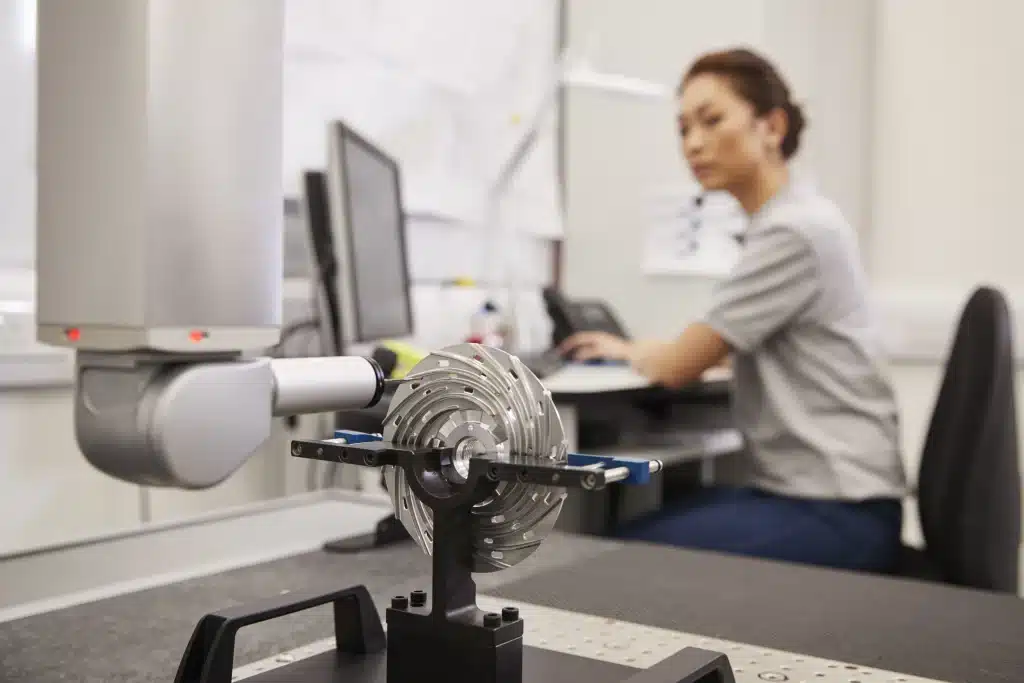
The strength of materials, also known as mechanics of materials, focuses on how different materials respond to forces such as tension, compression, shear, and torsion. This branch examines both stress (the internal resistance of a material) and strain (the resulting deformation) when forces are applied. Engineers rely on these principles to ensure that materials selected for a given application can handle the loads they will face in practical use.
Key areas of SOM include:
-Stress and Strain: Assessing how much stress a material can withstand before failure and how much it deforms under applied forces.
– Elasticity and Plasticity: Determining whether a material will return to its original shape after the load is removed (elasticity) or if it will experience permanent deformation (plasticity).
– Failure Theories: Predicting when and how materials will fail—whether through fracture, yielding, or fatigue—so engineers can design systems that avoid catastrophic failure.
Applications of strength of materials include:
– Designing bridges, towers, and buildings to ensure materials like steel, concrete, and wood can withstand the forces and loads they encounter.
– Developing machinery and mechanical components that are durable enough to operate reliably without breaking under operational stresses.
– Creating medical implants, such as artificial joints, that can endure the forces of everyday use without failure.
By mastering strength of materials, engineers can choose the right materials and ensure their designs are efficient, resilient, and capable of handling expected loads.

The Interconnected Nature of These Branches
Although each branch of engineering mechanics has a distinct focus, they are closely intertwined in real-world applications. For instance, when designing a bridge, an engineer must:
– Utilize statics to ensure the structure remains stable under its own weight and the loads it will carry.
– Apply dynamics to predict how the bridge will respond to moving vehicles or external forces like wind.
– Consider the strength of materials to choose components that can endure stress and maintain durability over time.
In summary, the three core branches of engineering mechanics—statics, dynamics, and strength of materials—equip engineers with the essential tools to design systems that are safe, efficient, and reliable. Mastering these concepts is critical for anyone involved in creating the structures and machines that sustain modern life.
Key Concepts in Engineering Mechanics
1. Force: A vector quantity that can cause a body to move or change shape. Forces can be applied in various forms—push, pull, or torque (twist)—and are measured in newtons (N).
2. Equilibrium: In statics, equilibrium occurs when the sum of all forces and moments acting on a body equals zero. A body in equilibrium does not move or rotate, making equilibrium analysis vital for structural stability in engineering.
3. Stress and Strain: Stress is the internal resistance of a material to an external force, while strain is the resulting deformation. Understanding the stress-strain relationship helps engineers design materials and structures that can withstand loads without failing.
4. Moment of Inertia: A measure of an object’s resistance to rotational motion, which depends on how the mass is distributed relative to the axis of rotation.
5. Work, Energy, and Power: Work is done when a force moves an object over a distance. Energy is the capacity to do work, and power is the rate at which work is performed. These concepts are crucial for analysing the efficiency and safety of mechanical systems.
Engineers apply these principles in practical scenarios. For instance, when designing a bridge, they must calculate the stresses on key components, like the bridge deck and supports, to ensure it can bear the weight of passing vehicles. By understanding these stresses and the corresponding strain materials can handle, engineers can create safe, reliable structures that perform as expected under various loads.
Applications of Engineering Mechanics
The principles of engineering mechanics are widely applied across various industries and fields:
– Structural Engineering: Engineers use mechanics to design buildings, bridges, and other structures, ensuring they can support loads and withstand environmental forces like wind and earthquakes.
– Mechanical Engineering: Mechanics is applied to design machines and mechanical systems, ensuring that moving parts operate smoothly and that systems can endure operational stresses.
– Aerospace Engineering: In designing aircraft and spacecraft, mechanics helps engineers understand how forces such as gravity, lift, and drag affect motion and stability.
– Automotive Engineering: Mechanics is essential in vehicle design, ensuring efficiency, good handling, and safety under different driving conditions.

Strength of Materials and Its Applications
The strength of materials is the field that studies how solid objects respond to various forces. Its applications extend across multiple disciplines, from designing bridges and buildings to analysing aircraft structures and biomedical implants.
As a crucial aspect of engineering mechanics, the strength of materials enables engineers to determine the loads that a structure can safely support, as well as the stresses and strains that materials experience under those loads. This knowledge is essential for creating safe and efficient structures and systems.
There are three primary approaches to analysing material strength:
1. Analytical Methods: These involve mathematical modelling to predict how materials will behave under stress.
2. Experimental Methods: This approach entails physically testing materials to observe their performance under different conditions.
3. Numerical Methods: Engineers utilize computer simulations to model how materials will respond to various loading scenarios.
Regardless of the method or combination of methods employed, understanding the strength of materials is fundamental to mastering the principles of engineering mechanics and designing robust, reliable structures.
Finite Element Analysis
Finite Element Analysis (FEA) is a numerical method used to solve problems in engineering mechanics. The core concept of FEA involves approximating the complex behaviour of a real-world object or system by breaking it down into simpler elements that can be analysed mathematically. FEA is utilized to predict how structures and mechanical components respond to various loading conditions, such as those encountered during earthquakes or impact events. It can also aid in optimizing the design of a component or structure to ensure it meets specific performance requirements.
Although FEA has been in use for several decades, its adoption has recently surged thanks to advancements in computer hardware and software. Today, FEA is a vital tool for engineers across multiple industries, including aerospace and automotive.

Final Thoughts
Engineering mechanics is a crucial discipline that connects theoretical physics with practical engineering applications. A solid understanding of mechanics is essential for engineers to accurately predict how systems will behave; without it, the risk of failures in structures, machines, or vehicles increases significantly. By mastering the principles of mechanics, engineers can design more reliable, efficient, and safer products, ultimately benefiting society. Whether building a skyscraper, designing a car, or developing aerospace technology, engineering mechanics is vital in ensuring the safety, stability, and performance of the systems and products engineers create.
Explore Tata technologies Courses for Mechanical Engineering Students
Mastering engineering mechanics is the key to building a strong foundation in mechanical engineering. Whether you’re a student or a professional, i GET IT by Tata Technologies offers expert-led courses that break down complex concepts into easy-to-understand lessons with real-world applications. Learn from industry experts and take your engineering skills to the next level!

Vinay
Related Posts

CATIA V5 Tutorial – How to Use Note Object Attribute with Ditto

Geneva Mechanism Explained: Working Principle, Design & Applications
What is Fluid Mechanics? – Introduction, Laws & Equations

What Is AutoCAD Software? Uses, Features & Practical Examples

Independent Front Wheel Suspension – Types, Benefits & Working
Find
Categories
Popular Tags